Method
LEGO® Serious Play®
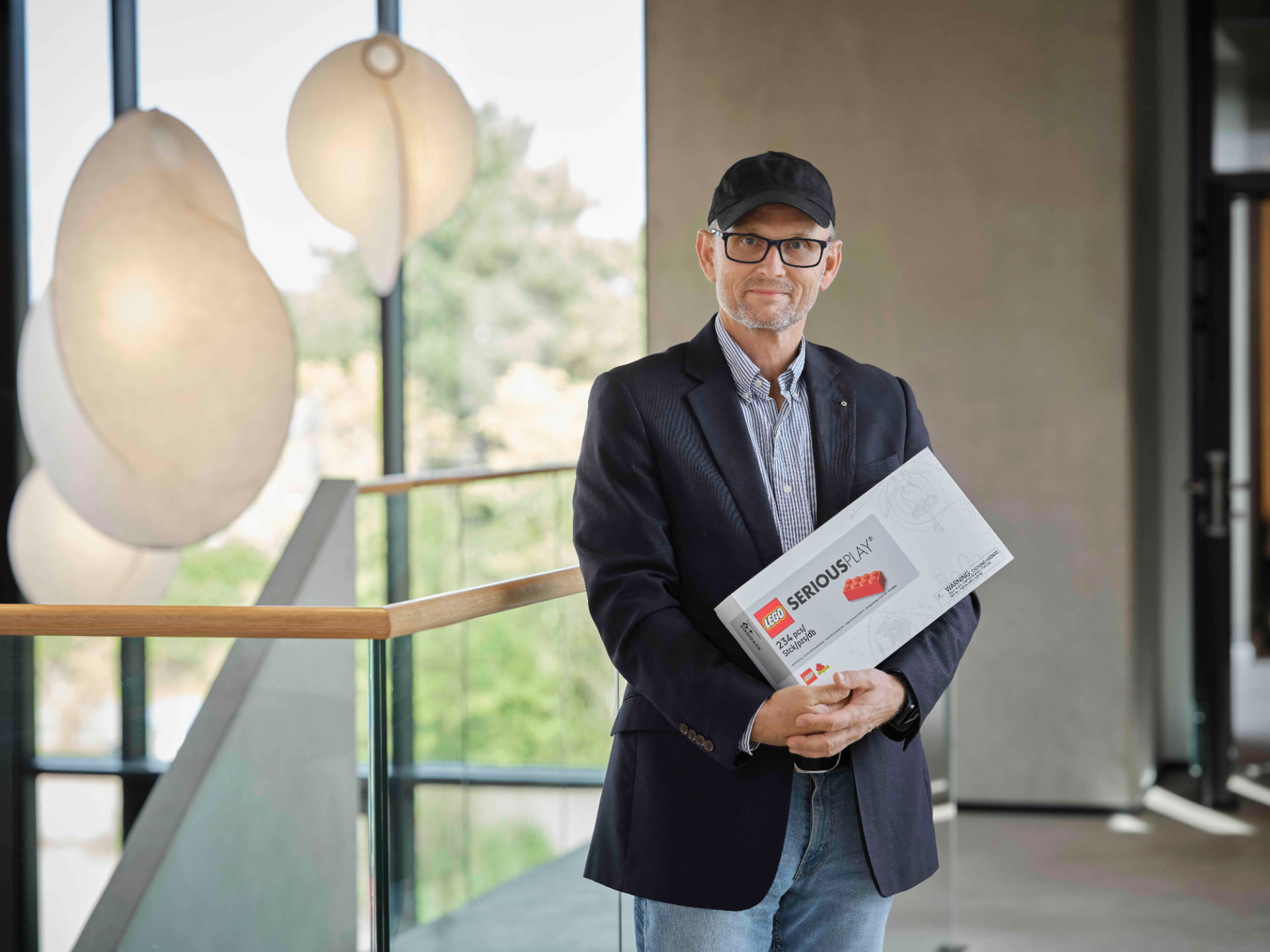
In the mid-1990s, Johan Roos and Bart Victor set out to solve a problem they kept meeting in boardrooms. The people with the most to contribute often said the least, and strategy conversations rewarded the confident over the wise. Their answer was to put the thinking into people's hands.
What it is
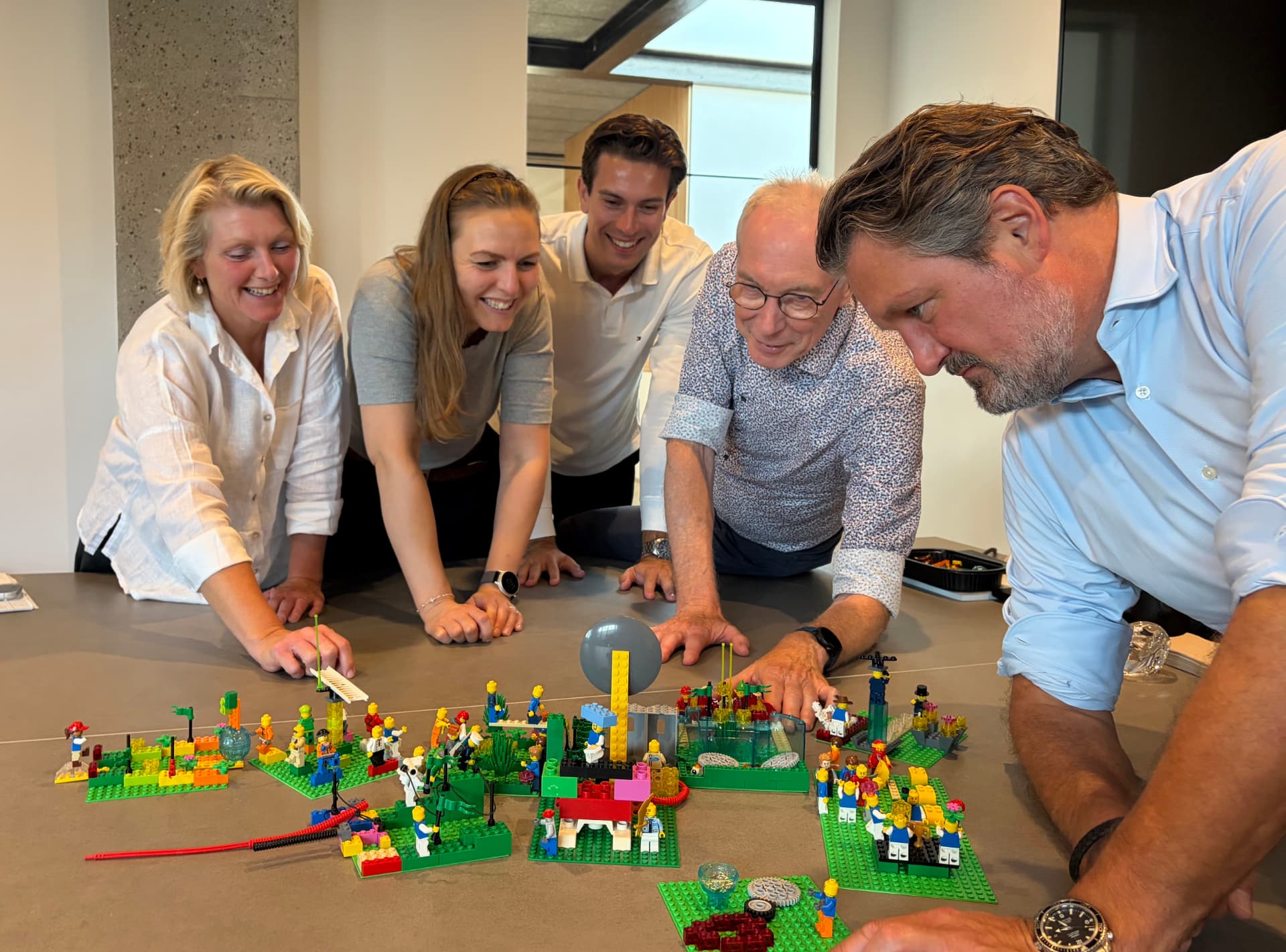
LEGO® Serious Play® is a facilitation method that has participants build models with bricks, then think and decide through what they have made. The premise rests on a straightforward idea about how people think. We understand more, and commit more, when we work problems with our hands and not only our words. Thousands of organizations now use the method to tackle strategy, identity, and complex challenges that talk alone leaves unresolved.
Why the method matters now
Something is shifting. As organizations hand real work to AI agents, they are discovering where the difficulty actually lives. It is in saying clearly, and deeply, what the work is: who we are, what we value, what good looks like. The technology is the easy part. The 2026 Stanford AI Index describes a field scaling faster than the practices around it can adapt, and the first peer-reviewed study of why multi-agent systems fail traces the largest share of failures to thin specification rather than weak models.
This is the same gap LEGO® Serious Play® was built to close. Thirty years ago the problem was strategy work that stripped the depth out of how people saw their own organization. Today it wears a different face, and its structure is identical. A method designed to surface identity, shared landscape, and guiding principles turns out to be a method for specifying the work we now ask machines to do.
Two things make this practical in 2026. Multimodal AI can finally hold what a workshop produces, the built models, the recorded stories, the participants' own principles, without flattening it into thin text. And the simple guiding principles the method has always generated read today as a form of practical wisdom: direction for judgment when no instruction can anticipate every situation.
In a new paper, "How It Continues" (IJMAR, 2026), Johan and Bart Victor make the case in full and name the design principle that keeps human judgment at the center: Human Magic in the Loop. The first quarter-century gave us the method. The second begins by reading it backward.
Further reading